

30 January, 2026

When Every CHROThinks Like a CTO: Why Campus Hiring Must Join India’s Digital Transformation Agenda
For the last few years one conversation has become increasingly common in boardrooms across India.
How do we reduce cost without slowing growth
How do we become more agile
How do we use technology and AI to do more with fewer people
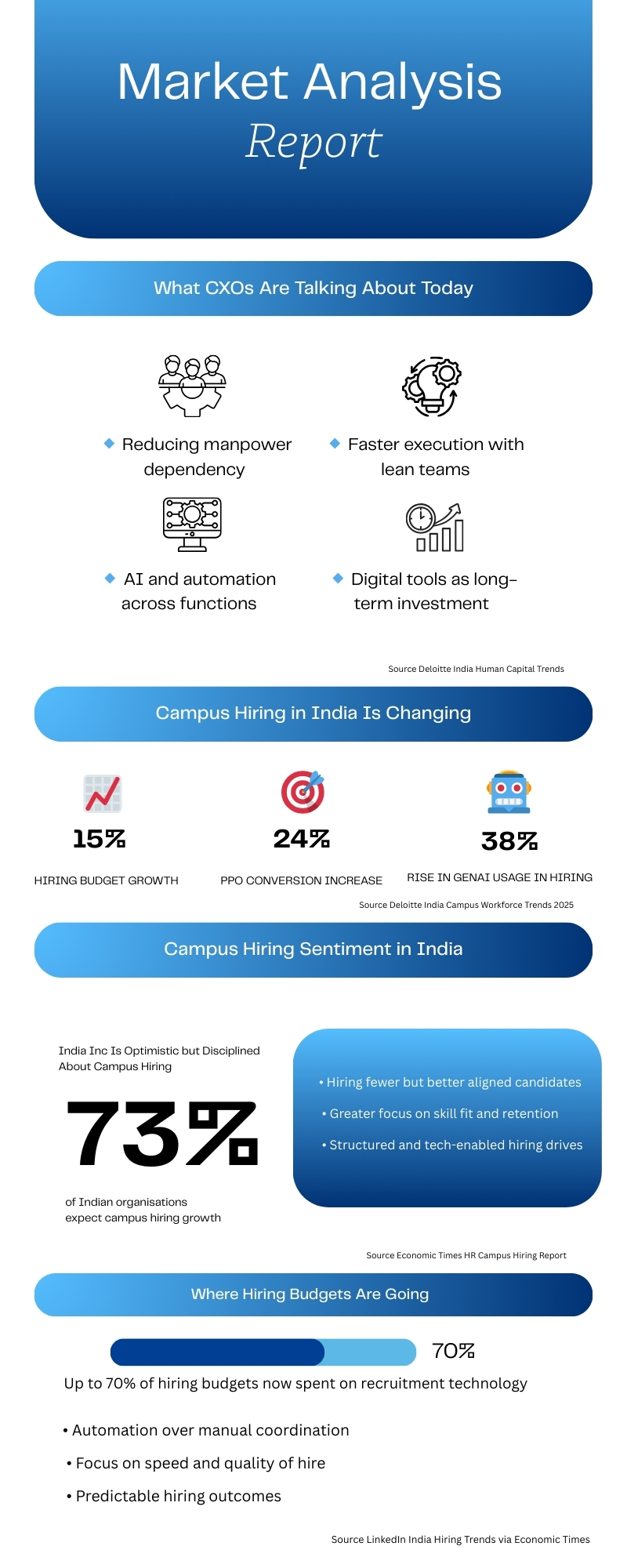
According to business and talent research from Deloitte India campus hiring is no longer a transactional, volume-based exercise. Recent data shows that campus hiring budgets rose by around 15 percent in FY25, reflecting renewed confidence among employers investing in young talent even as they adopt digital tools to improve efficiency and outcomes.
CHROThis shift is happening across functions, not just in IT systems or shop floors. Finance is talking about automation. HR is discussing AI-enabled workflows. Operations leaders are evaluating tech stacks. The focus is on cutting manpower costs while accelerating impact.
And the conversation about digital adoption is no longer theoretical.
Campus Hiring Is Shifting
From Numbers to Skills and Tech
Deloitte’s Campus Workforce Trends Report 2025 finds that attrition among campus hires has dropped by 300 basis points, and Pre-Placement Offer conversions jumped by 24 percent as organisations focus on skill alignment, early engagement, and measurable outcomes.
These shifts signal something important. Organisations are re-imagining early career recruitment by embedding technology into assessment, screening, internships, and talent engagement. They are moving beyond resumes to evaluate learning agility, cultural fit, and future readiness, all of which have downstream effects on retention and cost per hire.
India’s Employers Are Recalibrating for Quality and Growth
India’s own hiring sentiment surveys show that more than 70 percent of firms expect growth in campus hiring, even as talent strategies evolve toward quality and retention. Organisations are broadening employer pools, focusing on cultural fit, and thinking strategically about building future capability.
Even outside of official reports, hiring data reflects a broader picture:
Adecco India reports a 25 percent increase in campus intake in the first half of FY26 as major employers resume structured recruitment across key technical institutes.
Recruiters are increasingly targeting AI, data, cloud, and engineering profiles, driving demand for future-ready skills.
These shifts show that campus hiring continues to be a strategic lever for long-term growth and not a cost centre to cut.
Cost Considerations Go Beyond Salaries
While fresher salaries remain lower than experienced roles, the true cost of campus hiring includes:
Attrition and rehiring cycles, especially when hiring decisions are made without adequate role clarity
Relocation and onboarding expenses when talent is moved to unfamiliar geographies
Productivity loss during acclimatisation periods
Manual coordination costs from multiple campus visits, travel, and HR effort
Even small inefficiencies multiply at scale.
This reality has prompted recruiters in India to invest heavily in technology. According to LinkedIn research three out of four Indian recruiters are now allocating up to 70 percent of hiring budgets to recruitment technology and AI tools, prioritising quality of hire and measurable impact rather than volume alone.
Why This Matters for Boards and CHRO
In many organisations HR heads now think like technology leaders. Finance teams evaluate tools based on ROI, not just features. Supply chain managers consider automation as part of cost containment. This broader mindset shift reflects a deeper truth and digital transformation is no longer optional; it is essential for competitiveness.
Campus hiring must be part of that strategy.
By adopting structured digital platforms like Skillconnect, a campus hiring platform for entry-level hiring, organisations can accelerate evaluation, improve candidate experience, reduce coordination overhead, and gain visibility into outcomes. This brings predictability and cost discipline to a process that has long operated in a fragmented way.
The Future of Campus Hiring in India
Campus hiring will continue to be a key source of talent in India. But the organisations that thrive will be those that:
Treat early talent hiring as a strategic investment, not a cost centre
Align HR, finance, and business leadership around data and outcomes
Leverage technology to reduce manual burden and improve decision making
In an era where investors, boards, and business leaders expect agility and cost efficiency, the companies that build future-ready talent ecosystems will gain advantage, not just in hiring, but in execution and growth.
Because the true value of campus hiring lies not in the headcount added today, but in the capability built for tomorrow.
Author Bio
Ranu Parwal is a seasoned business leader and entrepreneur with over two decades of experience across telecom, banking, wealth management, payments, and talent solutions. He has held leadership roles at Philips, Airtel, ICICI Bank, Deutsche Bank, and Weizmann Forex. As the Founder of SkillsConnect and Acura Solutions, he focuses on building scalable, technology-led platforms that connect corporates, campuses, and early talent while helping organisations become future ready through structured digital transformation.


